Synthetic News · 25 November, 2026
Business Emails Landing in Spam: Causes and Ways to Improve Deliverability
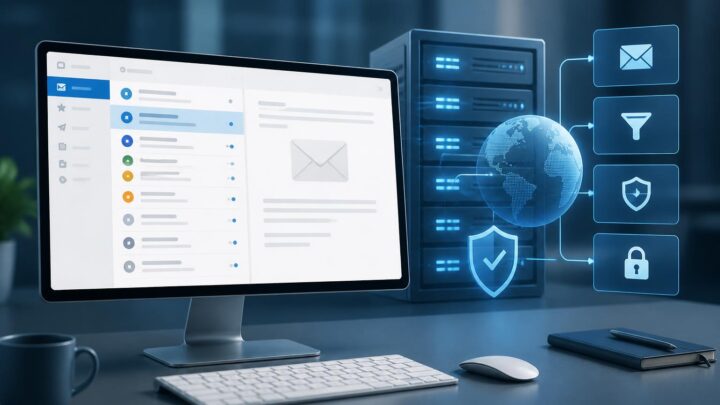
Business email is an important part of daily operations, from internal communication and sending quotations to confirming orders and supporting customers. However, many businesses find that sent messages do not reach the recipient’s primary inbox but are instead moved to the spam folder, delayed, or even rejected. This issue is often not caused by a single factor. It may be related to domain configuration, email list quality, message content, sending frequency, and the reputation of the sending server.
When an email is considered untrustworthy, a business does not merely miss one conversation. A quotation may go unread, a transaction notification may arrive late, and customer-care campaigns may lose their effectiveness. Therefore, improving email deliverability should be regarded as a combination of technical and operational management tasks, rather than simply changing the subject line or asking recipients to check their spam folder.
Why can legitimate emails still be sent to spam?
Today’s email services use many signals to assess whether a message is trustworthy. A system may examine the identity of the sending domain, the server address, the recipient’s interaction history, sending frequency, the rate of bounced messages, and negative feedback such as spam reports. An email created by a business for a legitimate purpose can still be filtered if many of these signals indicate risk.
A common cause is that the domain has not been fully authenticated. When the receiving server lacks a clear basis for determining which domain the email was actually sent on behalf of, the message may be subject to stricter scrutiny. This situation often occurs when a business has newly set up email, switched to another provider, or uses multiple email-sending platforms without updating the corresponding DNS records.
A poor-quality recipient list also directly affects deliverability. Addresses that no longer exist, were entered incorrectly, or have not interacted for a long time can increase the bounce rate and reduce the reliability of sending activity. If a business purchases or uses a list without the recipients’ clear consent, the risk of being reported as spam is even higher.
Three authentication layers to consider
To increase the trustworthiness of business email, administrators generally need to check three common authentication mechanisms: SPF, DKIM, and DMARC. These are not the only solutions to every deliverability problem, but they provide an important foundation for receiving servers to verify a message’s origin and determine how it should be handled.
SPF, short for Sender Policy Framework, allows a domain to publish the servers or services authorized to send email on its behalf. If a business uses multiple systems, such as its own email server, a customer-support platform, and a newsletter-sending tool, the list in the SPF record needs to accurately reflect all legitimate sending sources. A configuration that omits a sending source may cause legitimate messages to be viewed unfavorably, while an overly broad configuration reduces the value of the authentication mechanism.
DKIM, short for DomainKeys Identified Mail, uses a digital signature attached to an email. The receiving server can verify this signature using a public key published in the domain’s DNS. This mechanism helps prove that the message came from an authorized system and that important content was not changed in transit. Businesses need to coordinate with their email provider to ensure that the DKIM key and record are configured correctly.
DMARC, short for Domain-based Message Authentication, Reporting and Conformance, establishes a handling policy based on the results of SPF and DKIM while also supporting the monitoring of sending sources that use the domain. When implementing DMARC, a business should begin with a monitoring mode to collect information, check legitimate email-sending systems, and only then consider a stricter policy. Switching immediately to a reject policy without a thorough review can disrupt legitimate emails.
Manage the recipient list instead of simply increasing sending volume
A large email list does not necessarily mean an effective communication channel. What matters more is whether recipients know who the business is, have genuinely agreed to receive information, and are still interested in the content being sent. Businesses should prioritize lists formed through clear touchpoints such as sign-up forms, transactions, consultation requests, or existing customer relationships.
Lists should be cleaned regularly. Addresses that have bounced repeatedly, are invalid, or are no longer active should be handled according to an appropriate process. For recipients who have not interacted for a long time, a business can run a campaign to reconfirm their interest in receiving email before reducing the sending frequency or removing them from the list. This approach helps limit continued sending to addresses that no longer have value.
Businesses should also categorize recipients according to their interests and actual relationship with the business. Transaction notifications, support messages, newsletters, and promotional content may serve different purposes, so they should not always be sent to the same list at the same frequency. More relevant content increases the likelihood that recipients will open, read, or respond to a message, thereby creating positive signals for future sends.
Content and sending frequency affect reputation
A clear email usually tells recipients immediately who sent it, why they received it, and what action they need to take. The sender name should be consistent with the brand or a familiar communication department. The reply address needs to be able to receive and process responses, rather than being an address that no one monitors.
The subject line should accurately reflect the content and avoid being misleading or creating a false sense of urgency. The content should also maintain a balance among text, images, and links. Overusing pressuring phrases, inserting too many links, or using irrelevant content can diminish the recipient’s experience. For regular newsletters, businesses should provide an unsubscribe option that is easy to find and use. This is an important part of responsible communication, not a detail that should be hidden.
Sending frequency should be based on the expectations communicated to recipients. If someone signed up to receive a monthly newsletter but suddenly receives many emails within a short period, they may feel annoyed and mark the messages as spam. When it is necessary to increase the frequency, the business should provide appropriate notice or allow recipients to choose the types of information and preferred frequency.
Troubleshooting procedures when email problems occur
When a business notices that the rate of messages reaching primary inboxes has declined, it should not rush to change the entire system. First, it needs to determine the scope of the problem: whether it affects only one group of recipients, one receiving domain, or all addresses. Recording when the problem began, which types of email were affected, and the error messages from receiving servers will help narrow down the cause.
Next, the administrator should check the DNS records related to SPF, DKIM, and DMARC, while also reviewing the sending sources authorized by the business. If the provider, server, or email-sending platform has recently changed, the entire configuration should be reviewed rather than checking only one user’s inbox. Sending logs and bounce notifications may also indicate nonexistent addresses, full inboxes, authentication errors, or temporary problems on the receiving server.
During the investigation, the business should avoid sharply increasing sending volume or repeatedly sending the same email. This action can make the situation worse, especially when the list contains many invalid addresses. For important emails, the responsible team may use an alternative communication channel to confirm the information, but it should not send messages in rapid succession before understanding the cause.
Distinguish transactional email from marketing email
Transactional email is usually tied to a specific action, such as confirming a registration, notifying a user of an account change, or updating an order status. Marketing email, by contrast, is intended to introduce a product, program, or promotional content. Distinguishing between these two groups helps businesses design more suitable sending processes, recipient lists, and tracking methods.
If one system is used for too many purposes without clear rules, an ineffective marketing campaign can affect highly important transactional emails. Businesses should discuss with their service provider how to organize sending sources, subdomains, or separate configurations if the scale and operational requirements warrant it. The goal is to create better control, not to separate systems mechanically.
Reliable email starts with consistent processes
Improving email deliverability is not a one-time task that can simply be completed and forgotten. Domains, sending systems, recipient lists, and communication content can all change over time. Therefore, businesses need to incorporate email checks into their regular operational processes, clearly assign responsibility, and record configuration changes.
From a technical perspective, the platform needs proper domain authentication, logs sufficient for investigation, and alerting mechanisms for signs of unusual activity. From a content perspective, teams need to respect recipients’ consent, send relevant information, and maintain consistent identification. From a management perspective, every party using the domain to send email should be documented, approved, and reviewed when it is no longer needed.
Business email works effectively when recipients can recognize the sending source, understand why they received the message, and feel that the content is trustworthy. Combining SPF, DKIM, DMARC, a clean list, transparent content, and a reasonable sending frequency will help reduce the risk of legitimate messages being filtered incorrectly. More importantly, this is how a business builds a stable, responsible communication channel that better serves both internal operations and customer relationships.
Related articles

Website Access Management: An Essential Foundation for Reducing Security Risks
During website operations, access permissions are often granted quickly to meet work requirements. New employees need administrator accounts, design agencies need permission to edit the interface, content staff need to publish posts, while technical teams may need server access to resolve issues. If these permissions are not organized and reviewed regularly, the website will gradually
Read more
Optimizing Website Speed: From User Experience to Business Performance
In the online environment, users often judge a website within the first few seconds. A page that loads slowly, images that appear late, or content that shifts while the page is opening can make the experience frustrating, even when the product and information inside are high quality. Therefore, website speed is no longer a concern
Read more
Backing Up a Website Properly: A Recovery Plan to Help Businesses Reduce Disruption
A website is often viewed as an asset that operates continuously, but many businesses only pay attention to backups after an incident has occurred. An accidental deletion, a failed update, malware, server damage, or an issue with a service provider can all cause website data to be lost or become inaccessible for a period of
Read more
Website Access Control: An Essential Foundation for Reducing Security Risks
When operating a website, businesses often focus on the interface, page load speed, content, and search rankings. However, one factor that directly affects system security is easily overlooked: access permissions. When too many people use the same administrator account, when former employees still have login access, or when contributors are granted broader permissions than their
Read more
Protecting Your Business Email Domain: Why SPF, DKIM, and DMARC Must Be Configured Correctly
Business domain email is often considered a basic component of day-to-day operations. Employees use email to communicate with customers, send quotations, receive support requests, and confirm important transactions. However, behind a professional email address is an entire authentication system that must be managed carefully. If a domain does not have appropriate protection mechanisms, malicious actors
Read more
Optimizing Website Speed: From User Experience to Search Performance
In the process of building and operating a website, speed is often mentioned as a technical metric. However, for visitors, speed is not a single number but the entire experience from opening the page and waiting for content to appear to being able to read, scroll, or perform an action. A website with a beautiful
Read more