



Starlink Satellite Internet in Vietnam: When Will It Launch and Who Should Use It?

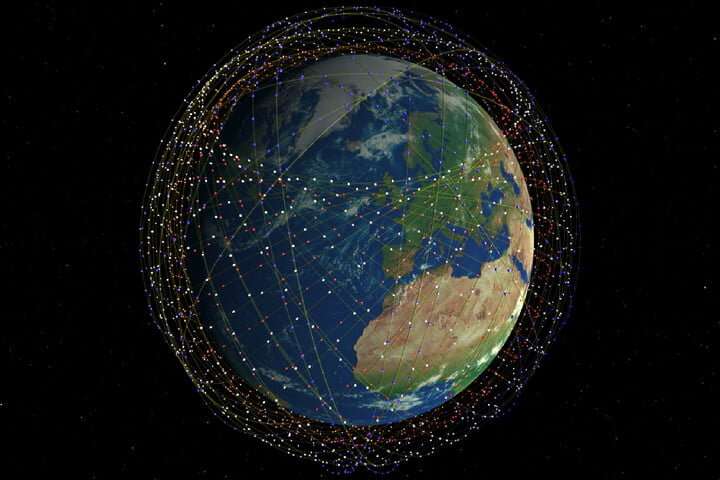
The satellite internet service Starlink is getting closer to commercial deployment in Vietnam, offering a fundamentally different connectivity option compared to traditional internet infrastructure. According to government direction, the service is expected to begin operations in 2026, with actual rollout potentially happening just a few months after licensing and technical infrastructure are completed.
Currently, the Ministry of Science and Technology has been tasked with promoting low Earth orbit satellite internet as part of Vietnam’s national digital infrastructure strategy. However, deployment progress still depends on the construction of ground gateway stations, a mandatory component for stable system operation.
The Vietnamese representative of SpaceX has planned to install gateway stations in several locations, including Da Nang, Phu Tho, and Ho Chi Minh City. According to commitments, the system could be completed within one year, but under favorable conditions, the timeline may be shortened to just a few months. This means users could access the service as early as mid-2026.
How Is Starlink Different from Traditional Internet?
The core difference lies in how data is transmitted. Instead of relying on fiber optic cables or ground-based towers, Starlink uses a network of low Earth orbit satellites flying at an altitude of about 550 km.
This technology introduces several key advantages.
First is near-global coverage. It can reach remote areas where traditional internet struggles, such as mountainous regions, islands, or underserved rural locations.
Second is rapid deployment. Users only need to install a satellite receiver to connect directly to the network, without waiting for cable installation or complex infrastructure.
Third is flexibility. Starlink works well for mobile or temporary needs, including construction sites, maritime operations, or emergency connectivity.
That said, satellite internet also has limitations. Costs are significantly higher than fiber internet, and connection quality may be affected by weather conditions or physical obstructions.
Who Should Use Starlink?
Starlink is not designed to replace traditional internet, but rather to complement it. The following groups are likely to benefit the most:
People living in remote or island areas without stable fiber infrastructure. For them, Starlink may be the only way to access high-speed internet.
Businesses operating in challenging environments such as mining, construction, high-tech agriculture, or logistics. These sectors often need reliable connectivity in places where fixed infrastructure is difficult to deploy.
Users who need backup internet. In case of large-scale outages, Starlink can serve as an effective alternative connection.
Additionally, organizations involved in disaster response, scientific research, or offshore operations are also ideal users of satellite-based connectivity.
Costs and Deployment Reality
According to current estimates, users in Vietnam may pay around $435 for the first month, including equipment and service fees. From the second month onward, the subscription fee is about $85 per month, which is significantly higher than typical fiber internet in Vietnam.
During the pilot phase, the number of user terminals will be limited to 600,000, representing only a small portion of the total fixed internet market. This indicates that Starlink is not yet a mass-market solution, but rather serves specialized needs.
The Role of Starlink in the Digital Ecosystem
The emergence of Starlink is not meant to replace existing telecommunications infrastructure, but to fill the gaps that traditional technologies cannot cover. In the broader picture, satellite internet is considered an important piece in completing Vietnam’s high-quality digital infrastructure, especially as digital transformation accelerates.
In the long term, as costs decrease and technology improves, satellite internet may become more widespread. For now, its greatest value lies in connecting areas that were previously left off the digital map.


