

Facebook Retargeting Ads: Building a Follow-Up Journey Without Being Intrusive


Facebook retargeting ads are often viewed as a layer of marketing for people who have already become aware of a business. They may have visited the website, viewed a product, interacted with a post, sent a message, or started filling out a form without completing the desired action. Compared with reaching an entirely new audience, this group already has a certain level of awareness, so the advertising message can be more specific. However, retargeting is only effective when designed as a continuing journey, rather than repeatedly showing the same ad in front of users.
A poorly segmented retargeting campaign can create the feeling of being watched, increase annoyance, and cause the budget to be spent on people who are no longer a good fit. By contrast, a well-organized retargeting system will answer the question customers have at each point in time: Is the product suitable, how can it be purchased, what is causing them to hesitate, and what should the next step be? This is a matter of data, messaging, and frequency control—not simply turning on an audience of people who have previously visited a page.
Retargeting Should Start with Behavior, Not a Large Audience
The starting point for retargeting ads is identifying behaviors that have business significance. Someone who has visited the homepage has only an initial level of interest, while someone who has viewed a great deal of content about a service, opened a pricing page, or added a product to their cart is in a different state. If all these groups are placed into the same audience, it will be difficult for the ads to address each person’s actual needs.
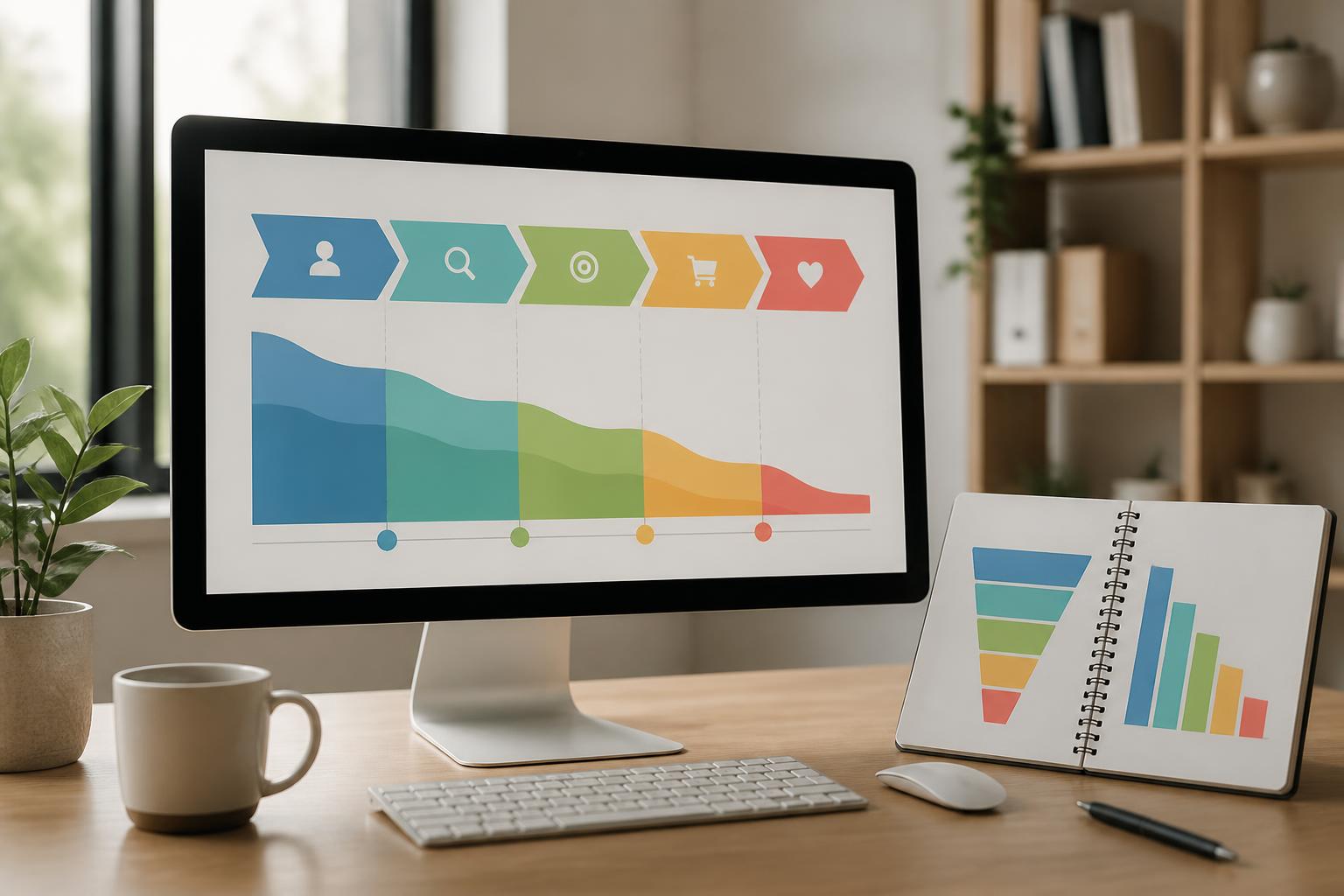
Businesses can build audience layers based on the actual customer journey. The first layer consists of people who have watched videos, interacted with content, or visited the website but have not explored the product in depth. The next layer consists of people who have viewed product pages, service pages, advisory articles, or comparison content. A stronger-signal layer includes people who have added products to their cart, started checkout, sent a message, signed up for a consultation, or taken a step close to conversion. Finally, there is the group that has made a purchase or completed a registration. This group should be used for retention, upselling, or promoting related products instead of continuing to show ads selling exactly what they have just purchased.
This segmentation does not need to be complicated from the outset. What matters is that each group has a clear reason for existing and a corresponding message. If you cannot explain which customer decision a particular audience was created to support, that audience may not yet need to be included in the campaign structure.
Design the Retargeting Period Around the Decision-Making Cycle
The amount of time since the most recent interaction often has a major impact on how relevant an ad is. Someone who viewed a product page yesterday may need a different reminder from someone who visited several weeks ago. Therefore, instead of maintaining a retargeting audience indefinitely, businesses should divide audiences into time windows that fit the purchasing cycle.
Recently Engaged Group
This group consists of people who have just viewed a product, started entering their information, or displayed behavior indicating clear intent. The content for them should focus on removing the most immediate obstacle, such as providing ordering instructions, explaining the consultation process, clarifying usage conditions, or returning users to the exact step they abandoned. Ads at this stage should be concise and consistent with the landing page. If users have viewed a specific service, sending them to a general page will break the flow of the experience.
Interested but Undecided Group
This group may have viewed a great deal of content but has not yet converted. They often need more evidence and context before taking action. Ads can introduce how the product solves a problem, the implementation process, frequently asked questions, or criteria for making a selection. The message should not pressure users to buy immediately if the data indicates that they are only beginning to research.
Previously Engaged Group
For people who have not returned for a long time, continuing to show direct sales ads may no longer be appropriate. Businesses can try directing them to new content, a related topic, or an invitation to revisit their needs. If this group does not generate positive signals after a testing period, consider removing it from the campaign to avoid diluting the budget and unnecessarily increasing frequency.
Messages Must Change According to Why Customers Have Not Converted
Not every case of not purchasing stems from the same reason. One person may not understand the product, another may not trust its quality, someone else may not see the timing as right, or may be experiencing difficulties in the contact process. Therefore, effective retargeting requires multiple content angles rather than simply changing the image color or repeating the call to action.
For people who have just viewed the product, ads should reinforce awareness and help them understand the core value. For people who have read in-depth content, the message can address use cases, implementation, and the results customers can realistically expect. For people who abandoned a form or cart, the ad should reduce friction by guiding them through the next step, clarifying the response time, or explaining what information they need to prepare. If the obstacle is a lack of trust, the content should prioritize transparency, processes, policies, and appropriate evidence instead of merely emphasizing an offer.
Changing the message must also go hand in hand with consistency in the promise. Ads should not present a benefit that the landing page cannot substantiate or lead users to expect a process different from reality. The gap between the ad and the post-click experience is one of the reasons retargeting can generate visits without producing sustainable conversions.
Exclude the Right Audiences to Avoid Waste and Annoyance
Setting up exclusion audiences is a part of retargeting campaigns that is often overlooked. If people who have already purchased, submitted a form, or completed a specific goal are not excluded, the ads may continue selling the same product to them. This not only reduces budget efficiency but also creates the impression that the business does not understand the customer journey.
Exclusion groups should be defined according to the objective of each campaign. A new-customer acquisition campaign should exclude people who are already customers or are already in the processing pipeline. A campaign aimed at encouraging registration completion should exclude people who have completed registration, while a separate group of those who have not completed it can receive supportive content. For upselling activities, people who have purchased the main product may in fact be an appropriate audience, but the message must shift from persuading them to make a first purchase to proposing additional value.
Businesses should also check for overlap among advertising audiences. A person who has watched a video, visited a product page, and abandoned a cart may appear in multiple audiences at once. In that case, determine which group has the stronger signal so it can receive priority, and remove users from the lower-intent group. This structure allows the message to follow the most recent behavior instead of allowing multiple ads to compete while targeting the same person.
Control Frequency and Watch for Ad Fatigue
Retargeting audiences are usually smaller than broad-reach campaign audiences, so ads can easily be shown repeatedly to the same person. High frequency is not always bad, especially when the purchasing cycle is long, but it should be evaluated alongside user feedback and conversion quality. When ads appear frequently without users progressing further in the journey, increasing the budget usually will not solve the problem.
Signs to watch for include declining performance over time, increasing negative interactions, rising costs for the desired action, or users frequently clicking but quickly leaving the page. These may indicate that the audience is too small, the content has become repetitive, the message is no longer relevant, or the landing page is not meeting expectations.
Instead of continuously replacing the entire campaign, businesses should examine each possible cause. They can refresh the content angle, change the presentation format, reasonably expand the time window, reduce overlap between groups, or remove users with weak signals from the audience. Every change should be documented so it is clear which factor actually produced an improvement, avoiding simultaneous adjustments to too many variables.
Measure Retargeting by the Quality of the Journey
Looking only at clicks or cost per click will not show whether a campaign is helping customers move closer to a decision. Businesses need to track differences among behavior groups, content, and retargeting periods. One group may generate many visits without producing qualified inquiries, while a smaller group may bring in customers with clear needs.
Evaluation should combine data from the advertising platform with data from the website, sales system, or customer-care process. Check what users from the ads did after visiting, how many inquiries were qualified, how long processing took, and whether revenue was generated. If data does not match across systems, conclusions about performance may be distorted. Therefore, before optimizing the message, businesses should check how events are recorded, the campaign naming conventions, and the relationship between online conversions and actual business results.
During measurement, it is also necessary to respect privacy requirements and user consent. Only data collected, stored, and processed under appropriate policies should be used. Retargeting should not become a reason for businesses to collect excessive data or use data for purposes beyond what users can reasonably understand.
A Process for Building a Lean, Easy-to-Control Retargeting System
A practical process can begin by mapping the journey from the first interaction to conversion. Businesses can then list identifiable behaviors, group them into a number of priority segments, and define the objective of each group. Each group should have its own retargeting period, message, landing page, and exclusion conditions.
Next, prepare multiple pieces of content based on common obstacles instead of simply producing more image variations. Check whether each ad properly continues the preceding experience. Once the campaign is running, monitor not only costs but also the extent to which users progress, negative feedback, overlap between groups, and conversion quality.
Finally, retargeting should be viewed as part of the overall marketing system. Someone who does not convert today may need educational content tomorrow, consultation afterward, and may become a customer at another time. When ads are built according to this logic, the business is no longer merely pursuing an old visit but is creating a deliberate, contextually appropriate sequence of experiences that is less likely to feel intrusive.