



Personal Finance Management Software: From Recording Expenses to Making Sound Decisions

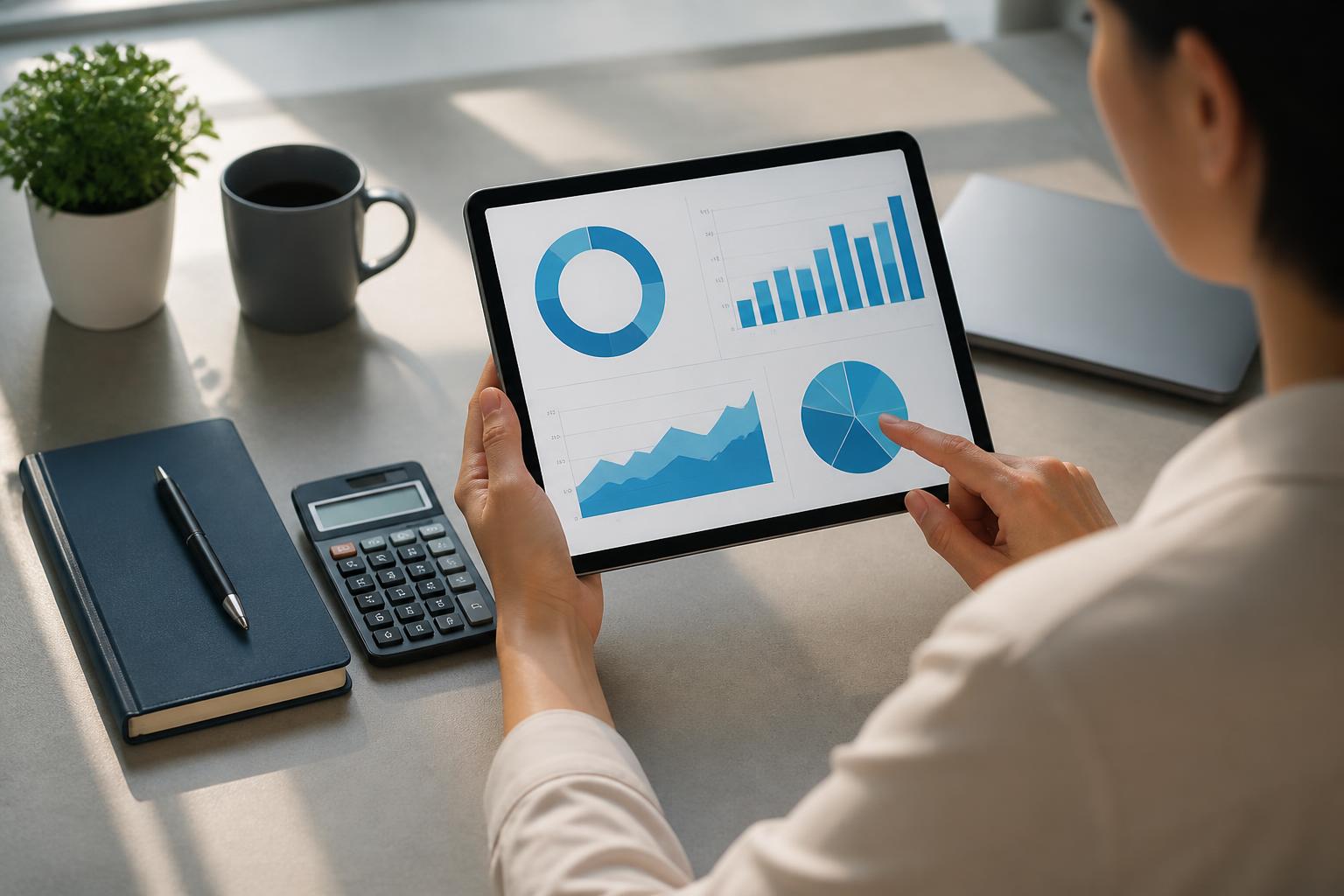
Personal finance management often begins with a very simple question: where did the money go this month? However, when payments are made with cash, bank cards, e-wallets, or recurring subscription services, answering that question is no longer easy. A few small expenses may be forgotten, recurring costs may go unnoticed, while savings goals often exist only as intentions.
Personal finance management software was created to solve this problem of organizing information. The tool does not make income increase automatically, nor can it replace the user’s decisions. Its main value lies in turning scattered transactions into an easy-to-read picture, thereby helping each person recognize spending habits, adjust priorities, and build more realistic plans.
Unlike a record-keeping sheet that focuses only on numbers, suitable software can also help categorize transactions, track budgets, remind users of bills, and compare their financial situation across different periods. Whether using an application on a phone or a tool running on a computer, users still need to begin by identifying which problem they want to solve.
What can personal finance management software do?
The fundamental function of this group of software is to record income and expenses. Users can enter the amount, time, description, and transaction category, such as food, transportation, housing, shopping, education, or entertainment. When data is updated regularly, expenses no longer remain scattered in memory or across multiple payment applications.
Categorization is particularly meaningful because the same amount of money can reflect very different decisions. A purchase of equipment for work should not be treated the same as the cost of an impulsive shopping trip. If categories are clearly named and used consistently, the end-of-month report will help users see the structure of their spending rather than merely the total amount they have spent.
Many software products also allow users to set budgets by category. Users can establish expected limits for food, transportation, or entertainment, and then track usage throughout the month. This is not a rigid command requiring every transaction to stop once it reaches the threshold. Rather, a budget is a signal for users to consider whether an expense is consistent with their current priorities.
Another group of features involves managing recurring income and expenses. Rent, service fees, tuition, software packages, or cyclical payments are often easy to overlook because they do not appear as a new purchasing decision every day. Once added to a tracking schedule, users can proactively prepare the necessary funds and prevent recurring obligations from disrupting their overall plan.
What matters is not the number of features
The market offers many tools, ranging from very simple to highly complex. Some applications provide only an income-and-expense ledger, while others include charts, multiple account types, financial goals, and data synchronization. More features do not mean that a tool is more suitable. If the interface is difficult to understand or the data-entry process takes too much time, users may give up after a few days.
The first criterion should be ease of use. An ordinary transaction should be recorded quickly, categories should be easy to find, and reports should be presented in a way that users can understand immediately. A good tool does not necessarily have to produce elaborate charts. A screen showing income, spending by category, and the remaining amount may sometimes be enough to support daily decisions.
Customization should also be considered. Everyone has a different financial structure, so the categories available in the software may not accurately reflect reality. Freelancers may need to separate work-related expenses from household expenses. A family may want to track spending on children, while someone living alone may be more concerned with rent and recurring services.
If the tool supports multiple devices, users should check how data is synchronized and handled when the connection is unstable. If it has data import or export functions, that is also worth noting because personal financial data should be capable of being stored and transferred when necessary. Being completely dependent on an application without being able to review the information creates unnecessary risk.
Security and privacy should come first
Financial data can reveal lifestyle habits, frequently visited locations, services being used, and many other sensitive details. Therefore, before entering data into any software, users need to carefully read how the tool stores, synchronizes, and protects information. Basic questions include: Where is the data stored? Does the account support additional authentication? What permissions does the application request? Can users delete their data when they stop using it?
Users should not share the password for a financial account with an application whose protection mechanisms are unclear. If the software has a feature for connecting to payment accounts, users need to weigh the benefits of automatically retrieving data against the level of access the service requires. For people who only need to track their budget, manually entering transactions may be slower but easier to control.
A unique, difficult-to-guess password and two-step authentication, if supported, are basic measures that should be prioritized. The phone or computer used to access the software should also have a screen-lock method. In addition, financial information should not be stored on a shared device without suitable protection mechanisms. Convenience is meaningful only when accompanied by the ability to control data.
Establishing a usage routine to avoid giving up
Many people download software expecting the tool to automatically change their habits. In reality, the most difficult part is often not installation but maintaining regular updates. A simple routine can reduce the sense of burden. Users can choose a fixed time each day to record expenses as they arise, or set aside a short period at the end of the day to review transactions.
During the initial stage, it is not necessary to create too many categories. Five or six groups that accurately reflect one’s needs are often more useful than a dense classification system that is difficult to maintain. After a few weeks, if users find that a category is too broad or does not help with decision-making, they can adjust it. The purpose of categorization is to clarify information, not to create additional administrative work.
At the end of each week, it is advisable to review unusual expenses and transactions that have not yet been recorded. At the end of the month, users can compare the planned budget with the amount actually spent. When discovering that a category has exceeded the plan, the question should not be whether to blame oneself, but whether the cause was an essential need, an unexpected event, or a habit that could be changed.
Goals should also be tied to specific amounts and deadlines. Instead of simply writing “want to save more,” users can determine an amount to set aside each month for an emergency fund, education, or a planned purchase. The clearer the goal, the more the software can support progress tracking. Nevertheless, the plan should still include some flexibility so that it does not become impossible when income or expenses change.
Common mistakes when using financial software
The most common mistake is entering overly detailed data from the beginning. Recording every expense across multiple layers of categories can create a sense of control, but if the process takes too much time, users are likely to abandon it. A simple system that is updated consistently is always more valuable than a perfect system that exists for only a few days.
Another mistake is treating reports as absolute conclusions. The figures in the software are accurate only within the scope of the data entered and the chosen method of categorization. If cash transactions are missed or income is not updated, the report may not fully reflect the situation. Therefore, reports should be regarded as tools to support thinking, not as substitutes for checking reality.
Users also tend to set budgets too low because they want to achieve the feeling of saving quickly. An unrealistic plan can make every unexpected expense seem like a failure. A budget should be built on transaction history, fixed obligations, and genuine priorities. After each cycle, limits can be adjusted based on experience rather than keeping an amount that is no longer appropriate.
Choosing a tool based on actual needs
Beginners may prioritize software with a clear interface, fast data entry, and basic reports. People who are already accustomed to tracking their finances may be interested in multiple accounts, savings goals, usage permissions, or data-export capabilities. Families sharing an account need to pay particular attention to access rights and how each member’s transactions are distinguished.
Before using a tool over the long term, it is advisable to test the process with a moderate amount of data. Check the creation of categories, editing of transactions, searching for old information, exporting data, and restoring access when necessary. If an important function is hidden or frequent operations cause confusion, that is a sign the tool may not be suitable, even if its feature list is very long.
Cost should also be considered alongside the value of use. A free product may adequately meet basic needs, while a paid plan is worth considering only if its additional functions genuinely save time or improve control. Users should not pay for features they do not understand or do not plan to use.
A tool can provide support, but decisions still belong to the user
Personal finance management software can make data clearer, but it cannot decide which expense is reasonable in a specific situation. A meal out may be a necessary expense on a busy day, while a large purchase may be an appropriate investment in one’s work. Each person’s context and priorities are the factors that ultimately determine the decision.
The lasting value of the tool lies in creating a habit of observation. When users know how their income is being allocated, they can respond more proactively to unexpected expenses, reduce ill-considered spending, and devote resources to important goals. This process does not need to begin with a complex system. With just an easy-to-use piece of software, a few suitable spending categories, and a regular review schedule, money management can already become more orderly.
Ultimately, software should be chosen based on the ability to maintain its use rather than on first impressions. A good tool is one that helps users understand their financial situation more quickly, protect their data more carefully, and make more thoughtful decisions. When used as part of a daily routine, software is not merely a place to record money that has already been spent; it also becomes a foundation for building realistic plans for the future.


