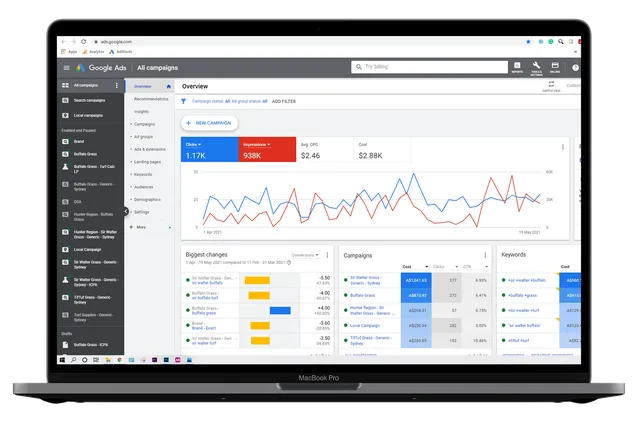



Google Ads Is Not Just About Conversions: How to Measure Customer Quality from Ads to Revenue


Many businesses evaluate Google Ads using a familiar number: the number of conversions. When a campaign generates many forms, calls, or messages, the report is often considered to be showing good results. However, this number does not indicate whether the customers are actually a good fit, whether the sales team can contact them, or whether revenue is ultimately generated.
The gap between a conversion and a valuable customer is becoming increasingly noticeable, especially in industries with lengthy consultation processes, high order values, or multiple confirmation steps before purchase. If optimization focuses only on the number of forms, the advertising system may find people who are willing to submit their information but do not necessarily have a genuine need. Conversely, a campaign that generates fewer leads but results in more appointments or contracts may actually be performing better.
Therefore, the focus of Google Ads should not stop at measuring what users did on the website. Businesses need to track the quality of those actions and connect them with sales data. This is the foundation for allocating budgets appropriately, adjusting advertising messages, and avoiding misguided optimization based on signals that are easy to measure but have little value.
Start by Redefining Conversion
A conversion is an action that a business considers meaningful. For an online store, it may be a completed order. For a service provider, an initial conversion may be the submission of a form, a phone call, or the booking of a consultation. The issue is not which action to choose, but that not all actions have the same level of importance.
A successfully submitted form only indicates that the user has completed the step of entering information. It does not confirm that the phone number is accurate, that the need matches the service, that the budget meets the consultation requirements, or that an employee has been able to make contact. If all forms are placed in the same group and treated as potential revenue, the business will lose the ability to distinguish between strong and weak signals.
A more practical approach is to build a conversion sequence by stage. For example, a user who views a service page and submits a form can be recorded as a new lead. When an employee verifies the need, the lead becomes a qualified lead. If the customer agrees to receive a quotation or book an appointment, that represents a deeper stage. A signed contract or paid order is the final business outcome.
Dividing these milestones does not mean turning the report into a complex system from the outset. A business can begin with three or four clearly defined statuses, as long as each status has specific identification criteria. A lead should only be considered qualified when the sales team has confirmed the need, contact information, and ability to continue the conversation, rather than simply relying on the fact that a form has been submitted.
Distinguish Primary and Secondary Conversions
In Google Ads, not every tracked action should be used for bid optimization in the same way. An action that serves as a reference may help a business understand user behavior, but if it is included among the primary goals, the system will tend to prioritize finding more similar actions.
For example, a thank-you page view after a form submission may be useful for checking data, but it should not necessarily be treated as equivalent to a paid order. Similarly, a click on a phone number may be a sign of interest, but it does not mean that an actual connected call took place or that a customer has received consultation.
Businesses should clearly determine which actions are primary goals to be used for optimization and which are only for observation. For a lead-generation model, form submissions may be the primary goal in the early stage when there is not yet enough sales data. Later, once the data-connection process is stable, qualified leads or sales opportunities may become more important signals.
It is worth noting that changing goals too frequently can make comparisons between stages difficult. Businesses should record when the change was made, why it was made, and how each type of conversion is defined. This prevents future reports from being misinterpreted when the number of conversions rises or falls because the calculation method has changed.
Connect Google Ads with the Sales Process
To measure lead quality, website data needs to be connected to data in a customer management system or at least to a standardized tracking process. Each lead should include information about when it was generated, its traffic source, the related campaign, and its processing status. If the advertising team sees only a form while the sales team sees only a phone number, the business will not be able to determine where its budget is producing results.
This process does not necessarily have to begin with an expensive system. A small business can use a form with clearly defined data fields, campaign naming conventions, and a table for tracking customer status. As the number of leads grows, moving the data into a CRM will help reduce missed leads, duplicates, or inconsistent updates between employees.
The important point is that the advertising source identifier must be saved together with the lead. If this information is lost immediately after the form is submitted, the sales team may still be able to process the customer, but the marketing team will no longer have a basis for evaluating which campaign generated a genuine opportunity. Source tracking should be tested in practice through trial submissions rather than simply assuming that the system is recording it correctly.
For calls, businesses also need to standardize how to distinguish missed calls, connected calls, calls of sufficient duration, and calls that create an opportunity. A click on a phone number cannot replace data about the actual conversation. If the product has a high value, employees should update call outcomes using simple and consistent statuses so that the data can be used for analysis.
Feed Sales Data Back into the Advertising System
Once a business has identified quality leads, data from deeper stages can be fed back into the advertising platform through an appropriate process. The purpose is to help the system recognize the difference between an ordinary form submission, a verified lead, an opportunity with a confirmed appointment, and a completed transaction.
Offline data imports are only valuable when the information is carefully reconciled. Businesses need to know which record corresponds to which visit or advertisement, when it was generated, and whether the status has actually been confirmed. If sales data is duplicated, incomplete, or assigned to the wrong source, the optimization results may become more distorted than if no data had been imported at all.
Expected revenue should not be entered into the system as though it were actual revenue. An opportunity may be canceled, a customer may change their needs, or an order may not yet have been paid for. Depending on the business model, a company can track each milestone separately and assign a value appropriate to the level of certainty in the data. The important principle is that the reported value must reflect internal conventions, not a figure created merely to make performance look better.
Before using deeper data to adjust the budget, a business should review a sufficiently long cycle to identify recording errors. It should compare the number of leads in Google Ads with the number of leads in the CRM, check for missing statuses, and determine whether canceled transactions have been counted incorrectly. A measurement system that is slow but reliable is generally more useful than one that updates quickly but cannot explain the origin of its data.
Do Not Overlook the Experience After the Click
Lead quality does not depend solely on the advertising algorithm. Landing pages, forms, and the business’s response speed also directly affect the likelihood of converting into customers. An advertisement that accurately describes a need but leads to a generic page will force users to search for information themselves. A form that is too long may reduce the number of submissions, while a form that is too short may produce insufficient data for screening.
The landing page should continue the promise made in the advertisement. If the advertisement refers to a specific service package, users need to see the corresponding information immediately on the destination page. The content should explain the scope of service, conditions of use, next steps, and how the business handles contact information. This clarity helps reduce unsuitable registrations while creating accurate expectations before an employee calls back.
Response time should also be included in the analysis process. A lead that is received but not contacted within a reasonable time may be incorrectly judged to be of poor quality. When reconciling data, businesses should separate cases where the customer was unsuitable from cases where the customer was suitable but was missed because of the handling process. These two causes require completely different solutions.
Metrics That Should Be Read Together
Cost per conversion remains a useful metric, but it should not stand alone. Businesses can consider it alongside metrics such as the rate of leads contacted, the rate of qualified leads, the appointment-booking rate, the closing rate, and cost per sales opportunity. For e-commerce, revenue, gross margin, return rate, and order value can provide a more complete picture.
Conclusions should not be drawn from only a few days of data, especially when the product has a long buying cycle. A campaign may generate leads today but can only be evaluated accurately after the sales team has completed the consultation steps. When comparing results, the definition of conversion should remain consistent, and factors such as seasonality, price changes, lead-handling capacity, or product availability should be considered.
In addition, businesses should analyze by group rather than looking only at the total figures. Keywords, ad groups, locations, devices, landing pages, or service types may produce different customer quality. However, segmentation is meaningful only when each group has sufficient data and the data is recorded consistently. If the analysis is too detailed for a small sample, the business may easily make decisions based on random fluctuations.
A Practical Implementation Roadmap
A business can begin with a complete review of every touchpoint. List where users see the advertisement, which page they visit, how they submit their information, who receives the data, and where the final status is updated. This step often reveals gaps such as an unrecorded thank-you page, calls without outcomes, or leads losing their source after being transferred into the internal system.
Next, standardize the names and criteria for each status. “New lead,” “contacted,” “qualified,” “quoted,” and “closed” should have the same meaning for both marketing and sales. Only when the two departments use the same language can advertising data reflect customer quality with reasonable accuracy.
Finally, establish a regular review schedule instead of checking reports only when costs increase. Each review should answer three questions: Is the data being recorded completely, which conversions are currently being used for optimization, and do those conversions correlate with business results? If the answers are unclear, the first issue to address is measurement and process, not increasing the budget.
Google Ads can help businesses reach the right needs, but the advertising platform cannot replace a well-organized sales system. When the focus shifts from the number of conversions to customer quality, businesses will see the true value of each campaign more clearly. As a result, optimization decisions will no longer be based primarily on numbers that are easy to increase, but on the ability to generate verifiable opportunities and revenue.