

Half of U.S. Data Center Projects Stall: When the “Power Crunch” Becomes AI’s Bottleneck

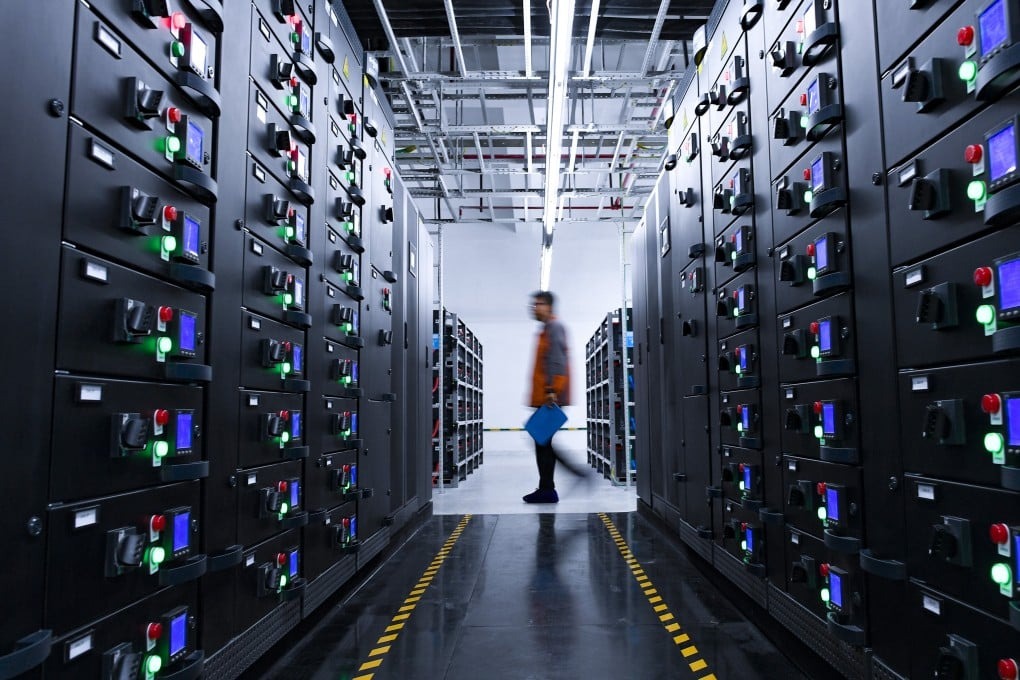
The surge in artificial intelligence investment is triggering an unprecedented infrastructure race in the United States. Yet behind the hundreds of billions of dollars being poured in and the aggressive expansion plans of major tech companies, a critical reality is emerging: power infrastructure, often considered a supporting element, is becoming the biggest constraint.
According to reports cited by Bloomberg, nearly half of planned data center projects in the U.S. are at risk of being delayed or canceled. Notably, the issue is not a lack of capital or demand, but rather bottlenecks in energy infrastructure and the supply chain for electrical equipment.
Power, not technology, is the real constraint
Tech giants such as Alphabet, Amazon, Meta, and Microsoft are accelerating investments in AI infrastructure, with total spending expected to exceed $650 billion. However, actual deployment is falling short of expectations.
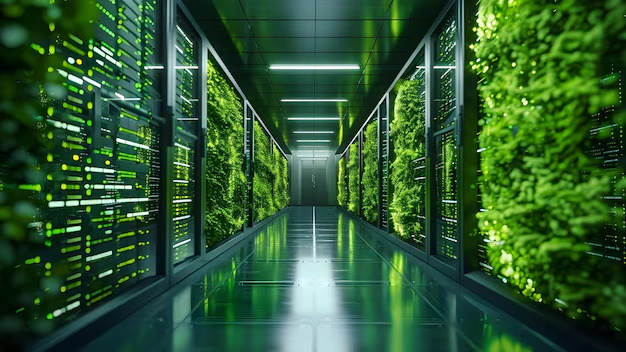
Data from Sightline Climate shows that around 12GW of data center capacity is expected to come online in 2026. Yet only about one-third of these projects have broken ground, while the rest remain stalled by multiple constraints, most notably power infrastructure.
A clear paradox is emerging. While electrical systems account for less than 10% of total investment costs, they are mission-critical. A delay in transformers, switchgear, or energy storage systems can halt entire multi-billion-dollar projects. These components have effectively become strategic bottlenecks.
A silent breakdown in the supply chain
The situation is worsening as delivery times for electrical equipment continue to lengthen. Before 2020, large power transformers in the U.S. typically had lead times of 24 to 30 months. Today, that timeline can stretch to as long as five years.
Meanwhile, AI data centers are often built within 18 months. This mismatch makes it nearly impossible for power infrastructure to keep pace with technological development, creating a bottleneck that cannot be resolved simply by increasing investment.
According to Wood Mackenzie, the U.S. is increasingly reliant on imports to fill the gap. Canada, Mexico, and South Korea have emerged as key suppliers. However, the most notable trend is the sharp rise in imports from China.
Transformer imports from China have surged from fewer than 1,500 units in 2022 to more than 8,000 units in 2025. China also supplies over 40% of battery imports to the U.S. and holds around 30% market share in certain categories of critical electrical equipment. This highlights a growing dependence on external supply chains.
Expert warnings: AI growth could be slowed by power limits
Energy and technology experts increasingly warn that the core issue is not a shortage of capital or innovation, but a lack of physical deployment capacity. In simple terms, AI cannot scale without sufficient electricity.
One key concern is that the pace of AI development could slow if data centers fail to come online as planned. Limited computing capacity would impact everything from research to commercial deployment.
Another major risk lies in supply chain dependence. Heavy reliance on imported equipment, particularly from China, raises concerns about energy security and geopolitical vulnerability. In the context of ongoing U.S.–China tensions, any disruption could have cascading effects across projects.
There is also mounting pressure on the national power grid. Demand is rising not only from data centers but also from electric vehicles and electrified heating systems. This creates direct competition for electricity resources, making expansion more complex.
Key warnings emerging from the situation
Current analysis highlights several critical risks. First, massive investment does not guarantee rapid deployment. Foundational factors such as equipment availability and grid capacity ultimately determine progress.
Second, energy infrastructure is becoming the hard limit of AI growth. Without timely upgrades, technological advancement will be constrained by power availability.
Third, global supply chains are proving increasingly fragile. Dependence on a limited number of countries for critical components introduces systemic risk.
Finally, costs are likely to continue rising. Scarcity of supply and longer lead times are pushing up both equipment prices and overall project costs.
A long-term perspective
Despite years of efforts to reshore manufacturing, U.S. capacity to produce electrical equipment still lags behind surging demand driven by AI.
This underscores a broader reality: building industrial and energy infrastructure takes far longer than developing software or digital technologies. While AI can advance rapidly, the physical systems required to support it expand much more slowly.
The data center slowdown reveals a deeper truth. The AI era is not just a race for better algorithms or more powerful chips. It is also a race for energy, infrastructure, and the ability to deploy at scale. Without resolving these bottlenecks, the U.S. may find its AI ambitions constrained not by a lack of innovation, but by the basic ability to power it.