


THE BOOM OF KOL-DRIVEN MARKETING: FROM PERSONAL TRUST TO THE MACHINERY OF MASS INFLUENCE

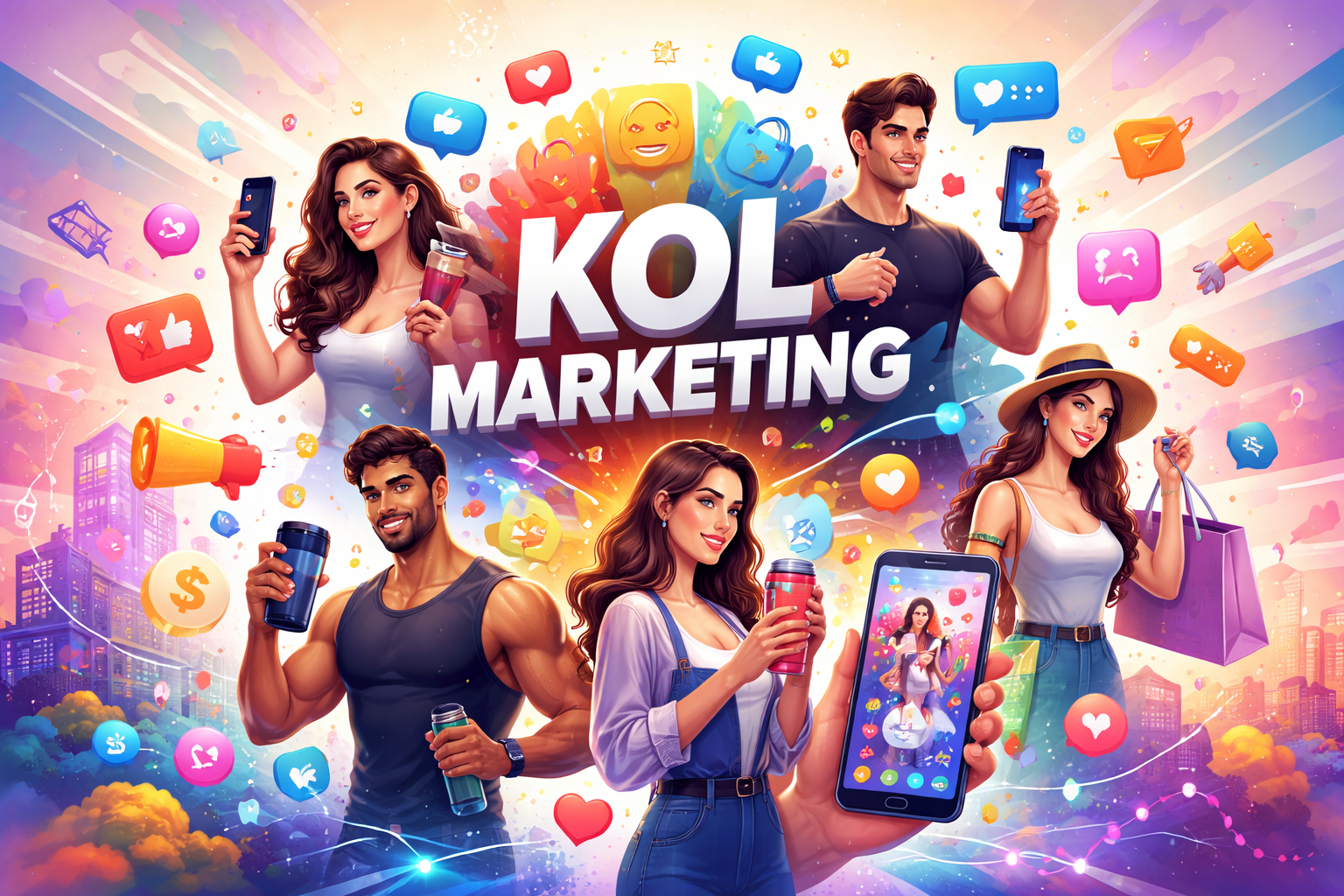
Over the past decade, marketing driven by influential individuals—commonly known as KOLs (Key Opinion Leaders)—has evolved from a peripheral tactic into a central pillar of modern communication strategies. In Vietnam as well as globally, it has become increasingly common to see KOLs appear across social media platforms promoting everything from cosmetics, functional foods, education, finance, and real estate to technology products. This explosion not only reflects a shift in consumer behavior but also signals a profound transformation in media power—from corporations to individuals, from brands to storytellers.
The Origins of KOL Marketing: When Personal Trust Becomes a Commercial Asset
Long before the term “KOL” became widespread, the essence of influence-based marketing had existed for centuries. In traditional societies, community trust was often placed in respected figures such as physicians, scholars, village leaders, or master craftsmen. Their words carried weight not because they were paid to speak, but because their credibility had been built through experience, ethics, and communal recognition.
In the twentieth century, this model became commercialized as movie stars, athletes, and musicians turned into brand ambassadors. However, these figures remained distant icons, communicating with the public primarily through television and print media, with limited direct interaction.
Social media fundamentally disrupted this dynamic. With the rise of Facebook, YouTube, Instagram, and TikTok, virtually anyone could build a loyal following. Beauty bloggers filming in their bedrooms, food reviewers eating at street stalls, or finance educators sharing investment insights—these individuals were no longer “celebrities” in the traditional sense, yet they wielded substantial and direct influence over consumer decisions. KOL marketing, therefore, did not originate from corporate strategies but from a broader societal shift in how trust is formed and distributed.
What Makes the KOL Wave So Remarkable
The key driver behind the rapid rise of KOL marketing lies in its perception of “real people with real experiences.” As consumers grow increasingly fatigued by traditional advertising, messages delivered through personal voices feel more relatable and credible. A single video sharing genuine user experience can often be more persuasive than dozens of carefully designed banner ads.
KOLs do more than transmit messages; they translate brand narratives into everyday language. Instead of highlighting technical specifications, they focus on emotions, lived experiences, and personal stories. This ability has made KOL marketing particularly effective in building brand awareness and accelerating purchase decisions.
Another critical advantage is precision targeting. Each KOL is typically associated with a niche community defined by shared interests, values, and behaviors. Brands no longer need to broadcast messages to the mass market; they can reach the right audience through individuals those audiences already trust.
Real-World Effectiveness: When KOLs Become Growth Levers
There is little doubt that KOL marketing has delivered tangible results for many brands, especially during product launches or market expansion phases. Numerous campaigns have achieved rapid reach, lower cost per impression compared to traditional advertising, and higher conversion rates due to the trust factor.
In Vietnam, several domestic brands have transformed their market position through effective KOL strategies, spanning cosmetics, fashion, and digital platforms. Globally, many direct-to-consumer (D2C) brands have relied on KOL marketing as the backbone of early growth before scaling up paid advertising.
Importantly, effectiveness does not stem solely from follower counts but from engagement quality. A micro-KOL with tens of thousands of highly engaged followers can sometimes outperform a celebrity with millions of passive fans. This underscores that KOL marketing is less about fame and more about trust capital.
Social Media: The Catalyst Behind the KOL Explosion
If KOLs are the flame, social media is the fuel. Platform algorithms favor personalized, emotionally engaging content—precisely the kind that KOLs excel at creating. Individuals who understand their communities can often produce content that resonates more deeply than corporate creative teams.
Social media also blurs the line between personal life and commercial activity. KOLs share daily routines, personal views, and lifestyle moments, seamlessly integrating products into these narratives. Advertising no longer appears as a direct sales pitch but as a natural extension of personal storytelling.
More importantly, social platforms amplify herd mentality and viral effects. When users see multiple KOLs discussing the same product, it creates a perception of trend legitimacy, encouraging collective purchasing behavior. This mechanism enables KOL marketing to generate “hype cycles” within remarkably short timeframes.
The Dark Side: When Trust Is Overexploited
Every boom carries its own consequences, and KOL marketing is no exception. The most critical issue is the erosion of trust. As KOLs promote an increasing number of products—particularly low-quality or controversial ones—audiences begin to question the authenticity behind each endorsement.
Many KOLs suffer from identity dilution, endorsing competing products within short periods and delivering inconsistent messages. Over time, this damages not only their personal credibility but also the brands associated with them.
Another major risk is reputational crisis. KOLs are human beings with personal lives and opinions. A single reckless statement, ethical scandal, or legal violation can quickly escalate into a brand crisis. In the era of social media, crises spread far faster than any corporate response mechanism.
The Dangerous Dependency of Brands on KOLs
A growing number of businesses, especially startups and small enterprises, fall into the trap of over-reliance on KOL marketing. Early sales growth driven by influencers can mask deeper weaknesses in product quality, brand values, and customer experience. When KOL effectiveness declines or costs rise, these businesses often struggle to sustain momentum.
Moreover, the KOL market itself is becoming saturated. Collaboration fees continue to climb while performance becomes less predictable. Consumers are also growing more discerning, increasingly able to detect sponsored content and developing resistance to overexposed influencer faces.
Balancing KOLs with Long-Term Strategy
Evidence suggests that KOL marketing is not a silver bullet but one component of a holistic communication strategy. Brands that succeed long-term use KOLs as accelerators rather than foundations. Ultimately, product quality, brand integrity, and customer experience remain the true determinants of sustainability.
For KOLs themselves, commercialization pressure raises ethical questions and social responsibility concerns. When every word spoken can influence hundreds of thousands of people, the boundary between personal sharing and paid endorsement must be clearly defined.
Conclusion: KOL Marketing as a Double-Edged Sword of the Digital Age
The explosive growth of KOL-driven marketing is an inevitable outcome of the social media era, where personal trust has become a measurable and tradable asset. It offers significant opportunities for both brands and individuals, yet carries substantial risks when abused.
In the long run, the market will self-regulate. KOLs who preserve authenticity, consistency, and ethical standards will endure. Brands that integrate KOL marketing into a broader, value-driven strategy will thrive. Those chasing short-term hype and borrowed influence, however, will ultimately pay the price—with trust, the most valuable currency in modern marketing.