



Software Asset Management: How Small Businesses Control Applications, Licenses, and Risks

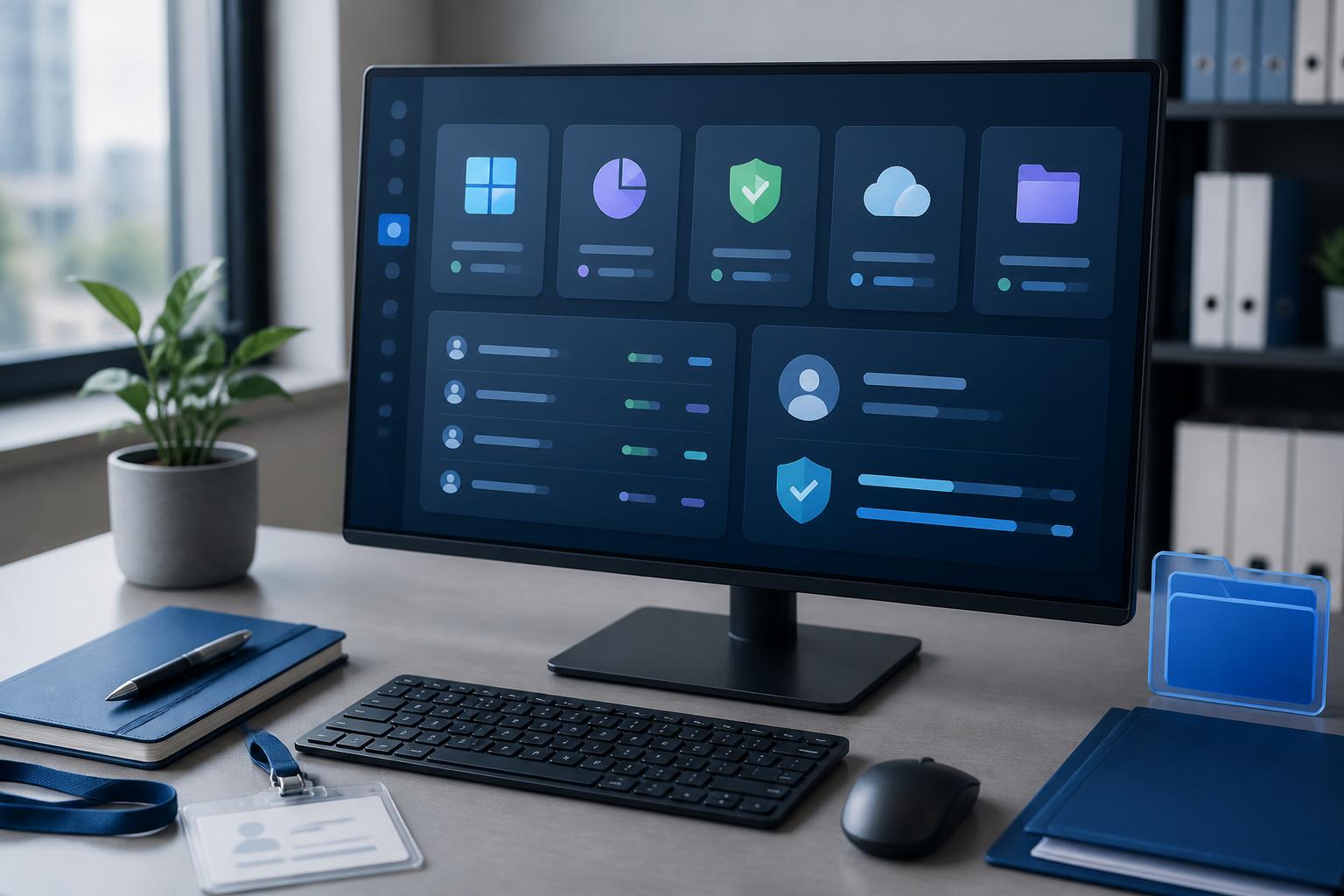
In many small businesses, software is often installed and used as needs arise from day to day. An employee downloads an image-editing tool to complete a task, the sales department subscribes to a customer management platform, while the technical team deploys an additional online service for testing. These individual choices can help work progress more quickly, but over time they create a difficult-to-control picture: how many applications the business is using, where data is stored, which accounts are still active, and which licenses are about to expire.
That is why software asset management should not be viewed solely as the responsibility of the information technology department. It is a process that helps a business understand the entire lifecycle of an application, from the moment a need arises, through selecting a solution, granting usage rights, and tracking costs, to removing it. When carried out properly, this process both reduces waste, supports security, and helps employees work more consistently.
What Does a Software Asset Include?
Software assets are not limited to programs installed on computers. The concept also includes applications used on phones, cloud platforms, browser extensions, online service accounts, usage licenses, license keys, and data created during operations. A tool that does not require installation, such as an online collaboration platform, is still an important asset if the business stores customer information or internal documents there.
A business should also consider user accounts to be part of its software assets. An account may be linked to access rights, data, transaction history, and payment methods. If an employee leaves but the account remains active, the risk lies not only in additional charges but also in the possibility of unauthorized access. Conversely, if an administrative account belongs solely to one individual and there is no handover plan, the business may encounter difficulties when it needs to change configurations or restore control.
Why Do Businesses Easily Lose Control of Applications?
The most common reason is that software purchasing and deployment take place in a distributed manner. Each department may independently seek a solution suited to its specific needs without notifying the person responsible for overall management. This approach often stems from a desire to save time, especially when internal approval processes are still slow. However, it makes it difficult for the business to determine total costs and to know which platforms are storing its data.
Another reason is that businesses only take inventory of their software when a problem occurs. When a computer breaks down, an employee leaves, or a service suddenly increases its fees, people only then begin searching for registration information. By that point, invoices may be scattered across multiple inboxes, login information may be held by several individuals, and licenses may not have been stored in a consistent structure.
Application trials can also easily create “hidden assets.” A team may sign up for a trial plan and then forget to cancel it before billing begins. Another service may continue to exist even though no one is using it anymore. Individual charges are often not large enough to attract immediate attention, but the total cost of numerous unnecessary services can become a long-term burden.
Establishing a Basic Software Inventory
A business does not necessarily need to purchase a specialized system immediately. For a small organization, a clearly designed data table can also be an effective starting point. What matters is that the inventory reflects the necessary information rather than merely recording application names.
Each row should correspond to one piece of software or one service, along with the vendor’s name, purpose of use, responsible department, manager, license type, start date, renewal date, expected cost, and payment method. For online services, it is also advisable to record the administrative address, where the data is stored, important access rights, and the status of multi-factor authentication, if available.
The inventory should also include a field indicating the level of importance. A tool used to draft internal documents does not have the same impact as an order-processing platform or a system storing customer information. Classification helps the business prioritize reviews of applications that could cause major disruption or contain sensitive data.
Distinguishing Approved Applications from Unevaluated Applications
Not every piece of software that is absent from the inventory is dangerous, but such software should be flagged for review. A business can divide applications into three groups: approved, awaiting evaluation, and not permitted for use. This classification is clearer than banning every new tool, while also creating a process for employees to propose solutions without registering them independently.
The evaluation should consider actual needs, the vendor’s reliability, how data is handled, account management capabilities, service termination terms, and compatibility with the systems already in use. For applications installed on computers, attention should be paid to the download source, update mechanisms, and the permissions requested by the program. For cloud services, the account policy, data export rights, and how data is deleted when use ends should be reviewed carefully.
Controlling Licenses and Recurring Costs
Software licenses are often overlooked because the payment date does not always coincide with the time of use. A service may be subscribed to using an employee’s personal card, while the finance department only sees the expense after the transaction has been completed. This management approach reduces the ability to forecast the budget and makes handovers more complicated.
A business should consolidate renewal information into a shared calendar and set reminders early enough to give the responsible person time to assess whether the service is still necessary. Before each renewal period, several questions should be answered: how many people actually use it, which features are used regularly, is there a more suitable plan, does the data need to be retained, and can the business switch to another solution without interrupting work?
Effectiveness should not be measured solely by cost reduction. A low-cost tool that lacks important features may cause employees to spend more time working or require them to use multiple supporting services. Conversely, a platform with higher costs but broad usage, centralized administration, and support for important processes may provide better value. The goal is to use the right software, the right number of licenses, and the software for the right purpose.
Connecting Software Management with Security
A software inventory has security value because it shows which points need to be updated, have their permissions restricted, and be monitored. Applications that are no longer supported by their vendors should be considered for replacement, especially if they handle important data. Accounts with administrative privileges should also be reviewed separately, because an infrequently used account with high-level permissions can still become a weak point.
When an employee changes positions or leaves the business, the handover process should include revoking accounts, transferring data ownership, terminating active login sessions, and updating the responsible person in the inventory. For shared platforms, administrative accounts should not be permanently tied to a personal inbox if the business can instead use a shared administrative address that is tightly controlled.
Access rights should also be granted according to work requirements. A user who only needs to create content does not necessarily need permission to install software, change billing information, or view all data. Separating roles helps reduce the impact if an account is compromised and makes subsequent reviews easier.
Should You Use Dedicated Asset Management Software?
As the number of applications, employees, and devices increases, a spreadsheet may no longer be convenient enough. Dedicated asset management software typically supports change history, renewal notifications, user tracking, linking assets to devices, and report generation. Some solutions can also detect software installed on computers, but automatically generated results still need to be reviewed by people to avoid confusing necessary applications with system components and temporary tools.
Before making a choice, a business should identify the problem it needs to solve instead of selecting the tool with the most features. If the primary need is license tracking, a lightweight system may be more suitable than a complex management platform. If the business needs to manage devices, accounts, and support requests as well, an integrated solution may be worth considering. Criteria to review include permission management, data export, activity logs, backup mechanisms, support for multi-factor authentication, and costs as the number of users increases.
An Implementation Process Suitable for Small Businesses
The initial phase should begin with a practical inventory. The person responsible can collect information from invoices, work inboxes, password managers, departmental computers, and lists of payment accounts. The goal is not to create perfect data immediately, but to find the biggest gaps: services with no clear owner, licenses nearing renewal, accounts belonging to former employees, and applications currently containing important data.
After creating the initial list, the business needs to identify an owner for each asset. The owner is responsible for knowing what the application is used for, who needs access, and when it needs to be reassessed. The information technology department can provide technical support, but the department using the application is usually the one that best understands the tool’s practical value.
Next, establish a concise process for proposing, approving, purchasing, deploying, and removing software. The easier the process is to understand, the more likely it is to be followed. Employees need to know whom to submit a request to, what information must be provided, and what temporary option can be used in an emergency.
Finally, a regular review schedule should be created. A review once every quarter, or at a frequency appropriate to the size of the business, can help update users, licenses, and service statuses. After each review, the inventory should reflect actual changes rather than merely being retained as a formal document.
Software Management Is the Foundation for Sustainable Operations
A business does not need to turn software asset management into a burdensome project. A centralized inventory, clearly assigned owners, a unified renewal calendar, and a process for revoking access already provide a significant foundation. As the business grows, it can add automation tools and connect data from other systems.
The greatest value of this process is that it helps the business make decisions based on real information. Instead of purchasing additional applications because it does not know what tools it already has, the team can make better use of what it owns. Instead of discovering old accounts after an incident, the business can address them immediately during the handover process. And instead of viewing software as a collection of separate expenses, the business can manage it as an asset portfolio directly connected to productivity, security, and the ability to grow.