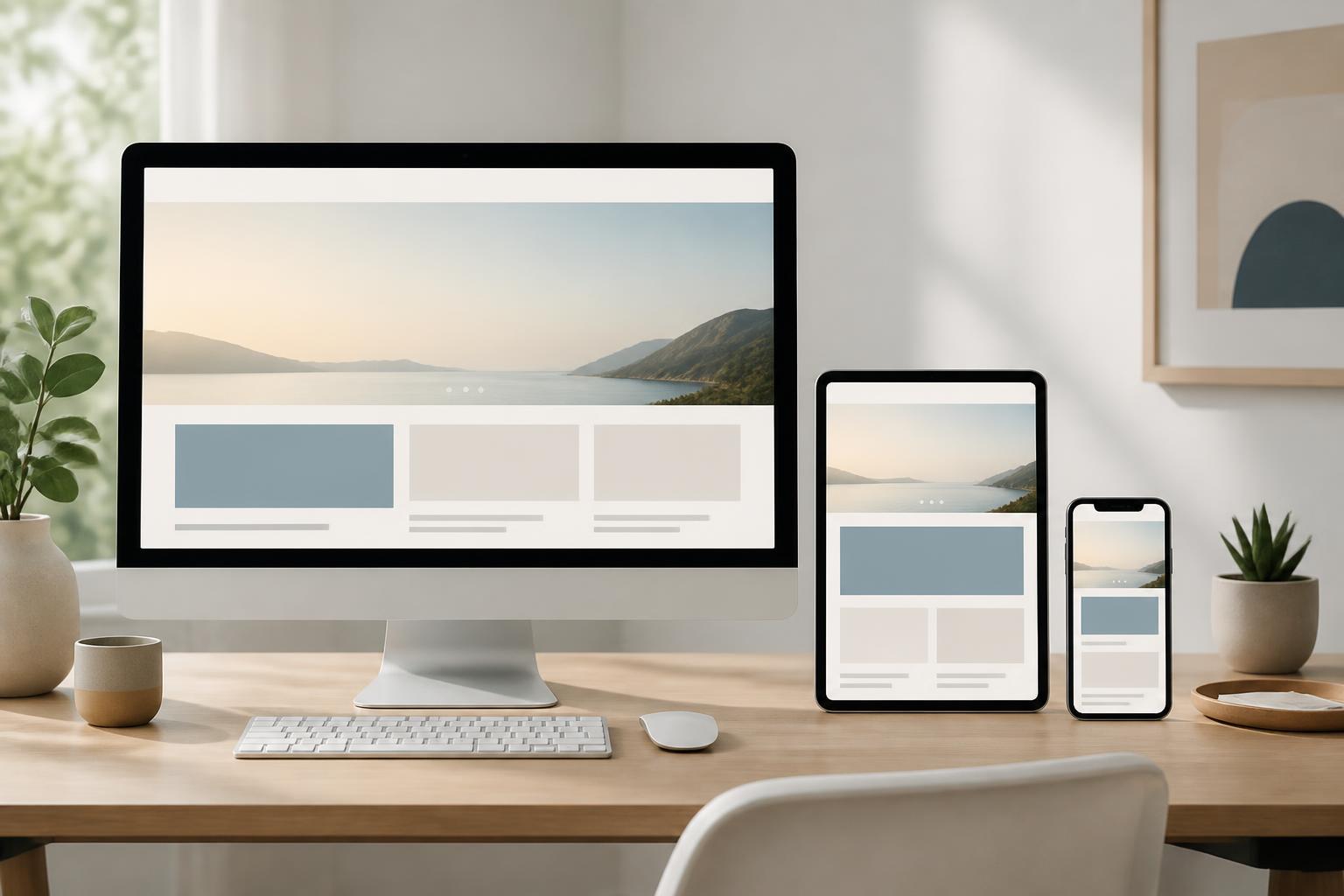



Systematic Website Design: The Foundation for a Consistent Experience


A website may start with just a few simple pages, but it often quickly becomes complex as a business adds products, content, forms, and new features. If each page is designed in its own way, the website can easily develop differences that are difficult to notice at first but have a significant impact on the overall experience. Buttons with different shapes, inconsistent spacing between content blocks, heading styles that vary from page to page, or the same function expressed in multiple ways all force users to relearn the interface.
Systematic website design is an approach intended to solve this problem. Instead of creating individual pages separately, the team builds a set of principles, components, and conventions that can be reused throughout the entire digital product. This is not simply a matter of choosing an attractive color palette or creating a few interface templates. A good design system connects brand language, user needs, and the development process into a foundation that can be maintained over the long term.
What Is Systematic Design?
A website design system can be understood as a set of standards that guides how an interface is created and developed. These standards typically include colors, typography, sizes, spacing, icons, buttons, input fields, content cards, navigation bars, notifications, and many other components. More importantly, the system also describes how those components should be used in different contexts.
The difference between a simple interface library and a design system lies in how the elements are connected. A library may provide many component templates, but a design system also answers questions such as which component is appropriate for which purpose, how error states should be displayed, how action buttons should be prioritized, and what principles should guide interface content. As a result, design does not depend entirely on the personal judgment of each person involved in the project.
Why Does a Website Need a Design System?
Creating Consistency in the User Experience
Consistency helps users recognize the website’s patterns. When buttons have similar behavior and appearance, users can predict how to interact with them without having to think too much. When headings, descriptive content, and action areas are organized in a familiar order, reading and decision-making also become easier.
Consistency does not mean that every page must look exactly the same. Each area of the website can still serve its own purpose, such as introducing the brand, presenting products, receiving consultation requests, or providing resources. A design system ensures that necessary differences take place within a shared framework, so that content diversity does not turn into interface fragmentation.
Shortening the Development Process
Once a component has been clearly defined, the team does not need to design it from scratch every time it creates a new page. Designers can focus more on content structure, experience flows, and the issues specific to each screen. Developers also have a clearer foundation for building reusable components.
This benefit is especially apparent when the website is updated frequently. A change to button styles, link colors, or spacing can be reviewed at the system level before being applied consistently. This process helps reduce differences caused by manually editing individual pages, while also making interface testing more focused.
Supporting the Website’s Long-Term Development
A website rarely ends after its initial launch. A business may add product categories, build a members’ area, expand its content, or connect with other tools. Without a shared foundation, each expansion risks creating a new version of the interface.
A well-organized design system helps new teams quickly understand how the website operates. Clear documentation also reduces dependence on one person’s memory or on decisions that were discussed but never recorded. This is important when project personnel change or when multiple teams are involved.
Components That Need to Be Built
The process should generally begin with foundational elements. Colors should be categorized by role, such as background colors, text colors, accent colors, link colors, and colors used for alert states. Categorizing colors by role is more useful than simply listing color codes, because it indicates the circumstances in which each color should be used.
Typography also needs specifications for font families, sizes, weights, line heights, and the relationships between heading levels. A well-structured type system helps users distinguish primary content, secondary content, and captions. At the same time, it provides a basis for new pages to maintain a reading rhythm similar to that of existing pages.
Spacing is an element that is easy to overlook but has a major effect on the interface’s sense of order. The team can establish a consistent spacing scale instead of choosing values arbitrarily for each area. This convention should be applied to spacing between text elements, within buttons, between form fields, between content blocks, and between the major sections of a page.
Interactive components also need to be described fully. A button does not only have a default state; it may also be hovered over, selected, processing, disabled, or in an error state. An input field should clearly show when the user is interacting with it, has entered incorrect information, or has not filled in required information. If only the ideal state is designed, the interface will easily lack guidance in real-world use and cause confusion.
From Small Components to Interface Patterns
A design system can be imagined as having multiple layers. The first layer consists of basic values such as colors, typography, and spacing. The next layer contains small components such as buttons, links, icons, labels, and input fields. These components are then combined into larger blocks such as search bars, product cards, newsletter sign-up areas, or service introduction sections.
At a higher level, the team can build layout patterns for recurring purposes. For example, a product detail page may include an image area, key information, a prominent action, and additional content. This pattern should not become a rigid template for every situation, but it helps ensure that important information is always considered according to a certain logic.
Organizing the system into layers allows the website to be both consistent and flexible. If the team focuses only on small components, it may still spend considerable time assembling them into a complete page. Conversely, if it creates only fixed page templates, adapting them to new content will become difficult.
The Process of Building a Design System
The first step is to take inventory of what already exists. The team should review important pages and record variations in colors, typography, buttons, forms, and layouts. The goal at this stage is not to immediately eliminate every difference, but to see the full picture in order to distinguish which patterns should be retained, which elements are duplicated, and which issues need to be addressed.
Next, the components should be grouped according to their intended use. Variations that differ only because of naming or minor modifications can be considered for consolidation. However, components with different behaviors should not be forced into the same template simply to reduce the number of components. The system’s simplicity should serve clear usage, rather than create overly rigid rules.
The next step is to create documentation and prototypes. Each component should have an understandable name, a brief description, its states, instructions for use, and cases in which it should not be used. Testing with real content helps reveal inflexibility early. A component may look reasonable in a design file but become inconvenient when a heading is long, the content changes, or users enter data differently than expected.
Finally, the system needs to be maintained as part of the product process. When a new need arises, the team should consider whether the component should become a shared element or remain a solution specific to one page. Agreed-upon changes should be updated in the documentation so that everyone works from the same version of the information.
Common Mistakes
A common mistake is to begin with decoration before defining the objective. An attractive color palette and many modern components cannot replace clear content structure. A design system should support the communication of information and the completion of tasks, not merely create a uniform appearance.
Another mistake is creating too many variations. If every small situation has its own button style or spacing value, the library will become difficult to remember and maintain. Before adding a variation, the team should determine whether the difference serves a genuine need or merely reflects the designer’s habit.
Giving the documentation to only one group can also reduce the system’s effectiveness. Designers, developers, content writers, and product managers are all involved in how the website is formed. The principles need to be clear enough for people who do not specialize in interfaces to understand both the reasons behind them and how to apply them in their own work.
A Design System Connected to Business Goals
A design system should not exist separately from the website’s goals. For a service website, the system needs to support the presentation of value, the building of trust, and the guidance of users toward the appropriate contact step. For an e-commerce website, components related to searching, filtering, viewing details, and taking action should prioritize clarity. For a content website, readability, navigation, and the ability to recognize relationships between topics may be more important than decorative effects.
Therefore, evaluating a system should not be based solely on whether the interface is consistent. It is also necessary to consider whether users understand the information, find the next step, and complete their objective. When business goals or user needs change, the system should also be reviewed to ensure that it remains appropriate.
Conclusion
Systematic website design is an investment in the sustainable development of a digital product. This approach creates a more consistent interface, reduces repetitive work, and provides a foundation for multiple teams to collaborate effectively. Its value does not lie in the number of components listed, but in whether the principles are clear, flexible, and connected to real-world experience.
A business does not necessarily need to build a large system from the outset. It can begin by taking inventory of the current interface, standardizing frequently used components, and documenting how they should be used. As the website continues to develop, the system can be expanded in response to specific needs. This is how design can be transformed from a series of individual decisions into a shared foundation that makes the website easier for users to understand and easier for the team to manage.