

Why Pest Control Businesses Should Prioritize SEM and SEO Over Facebook Ads When Budget Is Limited

In today’s increasingly competitive pest control market, choosing the right marketing channel is not just about visibility. It directly determines how efficiently a business can convert prospects into paying customers. A common mistake many companies still make is allocating a large portion of their budget to social media advertising like Facebook, expecting fast and broad reach, only to find that the results fall short of expectations.
In reality, for pest control services, user behavior is highly “intent-driven” and immediate. When people discover termites, cockroaches, mosquitoes, or rodents in their homes, they do not scroll through social media looking for inspiration. Instead, they immediately go to Google to search for a solution. This fundamental behavior is the key reason why SEM and SEO are far more effective, especially when marketing budgets are limited.
This article explores in depth why SEM and SEO outperform social media advertising in this industry, highlighting conversion efficiency, cost optimization, and policy advantages that businesses should understand to build a smarter marketing strategy.
User Behavior in Pest Control Is Driven by Immediate Needs
Unlike industries such as fashion, beauty, or entertainment where demand can be stimulated through engaging content, pest control is directly tied to urgent, real-life problems.
When someone notices termites damaging furniture, cockroaches in the kitchen, or mosquitoes in the bedroom, their reaction is immediate. There is a sense of urgency and discomfort that pushes them to act quickly. They are not interested in browsing or being entertained. They are looking for a fast, reliable solution.
In these moments, Google becomes the primary tool. Users search for terms like “termite control service,” “cockroach extermination near me,” or “pest control cost.” These queries clearly indicate strong intent and readiness to take action.
SEM and SEO allow businesses to appear exactly at this critical moment. This is a crucial difference compared to Facebook, where ads are shown based on interests and behavior rather than real-time intent.
SEM Delivers Immediate Conversions When Demand Exists
Search Engine Marketing enables businesses to appear at the top of search results almost instantly after launching a campaign.
The greatest strength of SEM lies in its ability to capture high-intent users. When someone searches for pest control services, they are already in the final stage of the buying journey. They are no longer exploring options casually. They are actively looking for a provider.
This results in significantly higher conversion rates compared to social media ads. Instead of reaching thousands of uninterested users and hoping to find a few potential customers, SEM targets people who are already ready to buy.
For businesses with limited budgets, SEM offers precise cost control. You can focus on high-conversion keywords and avoid wasting money on impressions that do not lead to action.
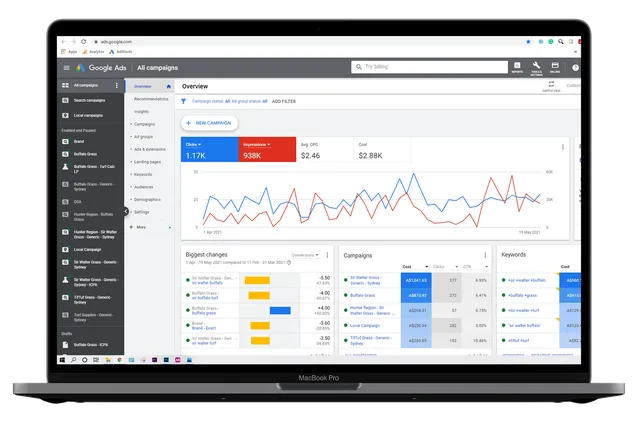
Additionally, SEM campaigns can be continuously optimized based on real performance data. Adjusting keywords, ad copy, and landing pages allows businesses to improve results without necessarily increasing spending.
SEO Builds a Sustainable Source of Customers and Reduces Long-Term Costs
While SEM delivers immediate results, SEO lays the foundation for long-term growth.
Once a website is well-optimized and ranks high on Google, it can attract consistent organic traffic without paying for each click. In the pest control industry, this is especially valuable because search demand remains stable over time.
Keywords related to termite control, cockroach removal, or mosquito treatment are consistently searched. They are not dependent on trends or seasonal hype.
SEO also strengthens brand credibility. When users repeatedly see your website appearing in search results, trust naturally increases. This trust plays a significant role in decision-making, especially for services that affect health and living environments.
Another advantage of SEO is content scalability. Businesses can create informative articles addressing common pest problems, prevention methods, and treatment solutions. These articles not only improve rankings but also position the business as a reliable expert.
With a limited budget, investing in SEO helps reduce long-term marketing costs. Instead of continuously spending on ads, businesses can rely on organic traffic to sustain growth.
Facebook Advertising Relies on Engagement and Is Less Suitable for Urgent Needs
Facebook is a powerful platform for brand awareness and audience engagement. However, it is not the most effective channel for direct conversions in the pest control industry.
Facebook ads depend heavily on engagement signals such as likes, comments, and shares. To achieve wide distribution, content must attract interaction, which requires time and creative strategy.
Pest control, however, is not a topic that naturally generates engagement. People are unlikely to like or share posts about cockroaches, termites, or rodents. This makes it harder for ads to spread organically and increases the cost of reach.
More importantly, Facebook is not where users go when they have an urgent problem. Even if they see an ad, it does not mean they need the service at that moment. This leads to lower conversion rates.
For businesses with limited budgets, investing heavily in Facebook ads can result in high spending with minimal returns. Maintaining visibility requires continuous spending, while the outcomes remain unpredictable.
SEM and SEO Maximize Conversions Under Budget Constraints
When resources are limited, the priority should be maximizing conversions per dollar spent. SEM and SEO achieve this by targeting users with clear intent at the right time.
SEM captures immediate demand and generates quick leads. SEO ensures a steady flow of organic traffic over time. Together, they create a balanced and efficient marketing system.
A practical approach is to use SEM initially to generate revenue quickly, then invest in SEO to build long-term stability. This strategy is particularly suitable for small and medium-sized pest control businesses.
Policy Advantages of SEM and SEO Over Social Media Advertising
An often overlooked factor is advertising policy compliance. The pest control industry involves chemicals and pesticides, which are subject to strict regulations.
Facebook enforces rigorous policies regarding products related to chemicals, health, and safety. Ads can be rejected or restricted if they do not meet specific requirements, including certifications and documentation.
This creates challenges for businesses, especially those without complete regulatory paperwork. Resolving account restrictions can be time-consuming and costly.
In contrast, SEM and SEO offer greater flexibility. Businesses can structure content to focus on services rather than specific chemical products.
For example, a website can promote termite treatment services without detailing the exact chemicals used. This reduces compliance risks while still meeting customer needs.
SEO also allows for educational content that informs users without violating policies. This is a significant advantage compared to social media platforms with stricter content controls.
Combining SEM and SEO for Maximum Effectiveness
To achieve optimal results, businesses should integrate SEM and SEO into a unified strategy.
In the early stages, focus on high-intent keywords through SEM to generate immediate leads. At the same time, build an SEO-optimized website with valuable content.
As SEO performance improves and organic traffic grows, reliance on paid ads can gradually decrease. This helps reduce overall marketing costs while maintaining consistent customer acquisition.
Understanding user behavior and selecting the right channels is essential. In an industry driven by urgent needs, SEM and SEO clearly provide a more logical and effective solution than Facebook advertising.
The pest control industry requires a suitable marketing strategy.
The pest control industry requires a marketing approach aligned with real user behavior. Customers are not seeking entertainment or inspiration. They are searching for immediate solutions to urgent problems.
This is why SEM and SEO consistently outperform social media advertising. SEM delivers instant visibility when demand arises, while SEO builds a sustainable and cost-efficient traffic source.
With limited budgets, prioritizing SEM and SEO allows businesses to maximize conversions and minimize waste. Compared to Facebook ads, these channels not only provide better performance but also offer greater flexibility in terms of policy compliance.
In a competitive market, choosing the right marketing strategy is not just an advantage. It is a necessity. For pest control businesses, SEM and SEO are not simply options. They are the most practical and effective path to sustainable growth.